For our latest DFC Member Spotlight we’re featuring BAFTA-winning filmmaker Victoria Mapplebeck.
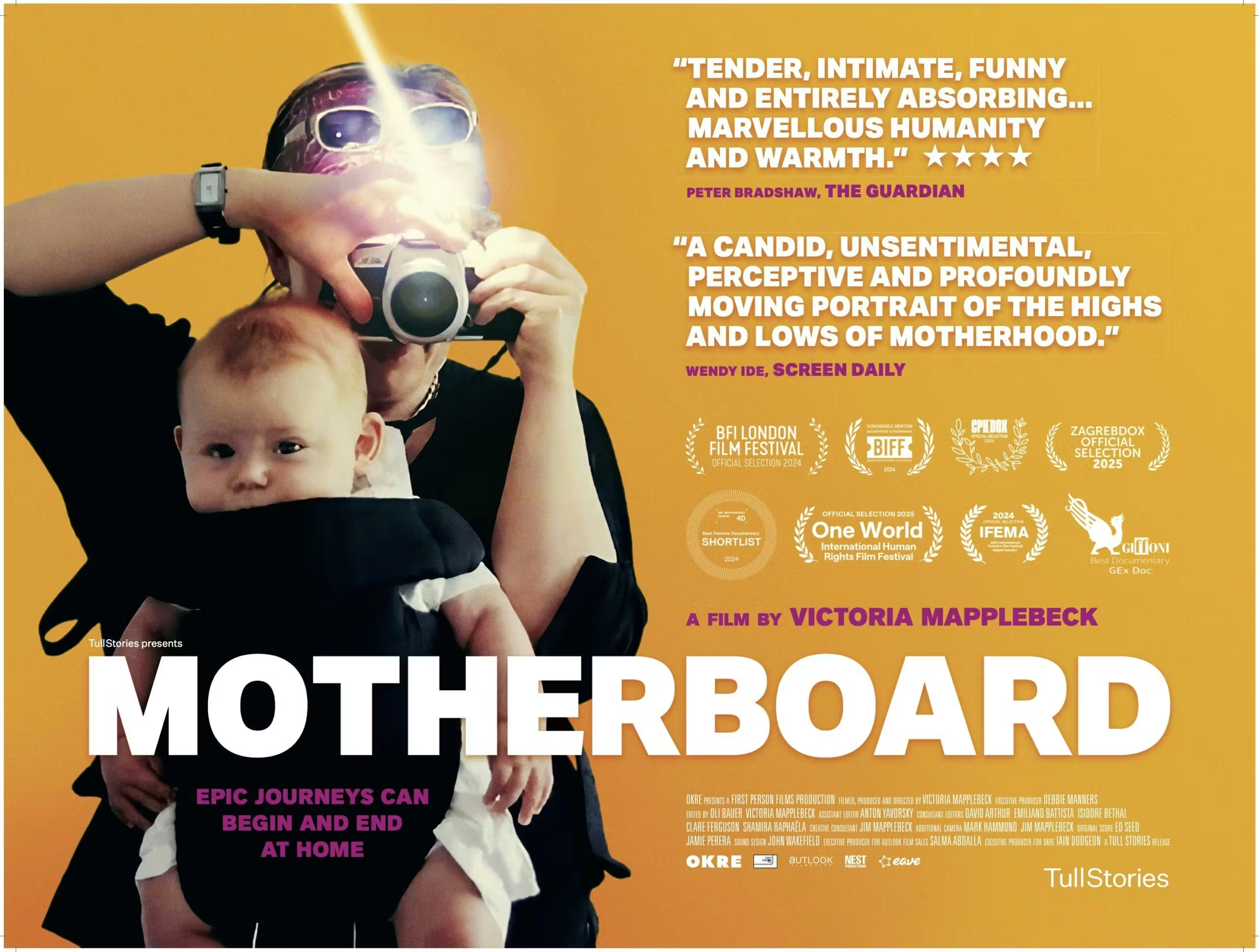
Victoria’s work turns the camera inward to explore big questions through the everyday: technology, motherhood, illness, and what it means to stay human in a hyper-connected world. Her most recent feature, Motherboard (2024), charts two decades of solo parenting, breast cancer, and survival: a funny, raw, and deeply feminist portrait of motherhood that refuses the glossy myths.
Premiering at CPH:DOX before screening at the BFI London Film Festival, Motherboard has been recently nominated for Best Cinema Documentary at the 2025 Grierson Awards and received a four-star Guardian review from Peter Bradshaw. We spoke to Victoria about turning her life into art, the ethics of filming her son, and why the domestic can be epic.
Interview by DFC Member, Holly Tarquini
Holly Tarquini: Victoria, for anyone new to your work, how did Motherboard begin?
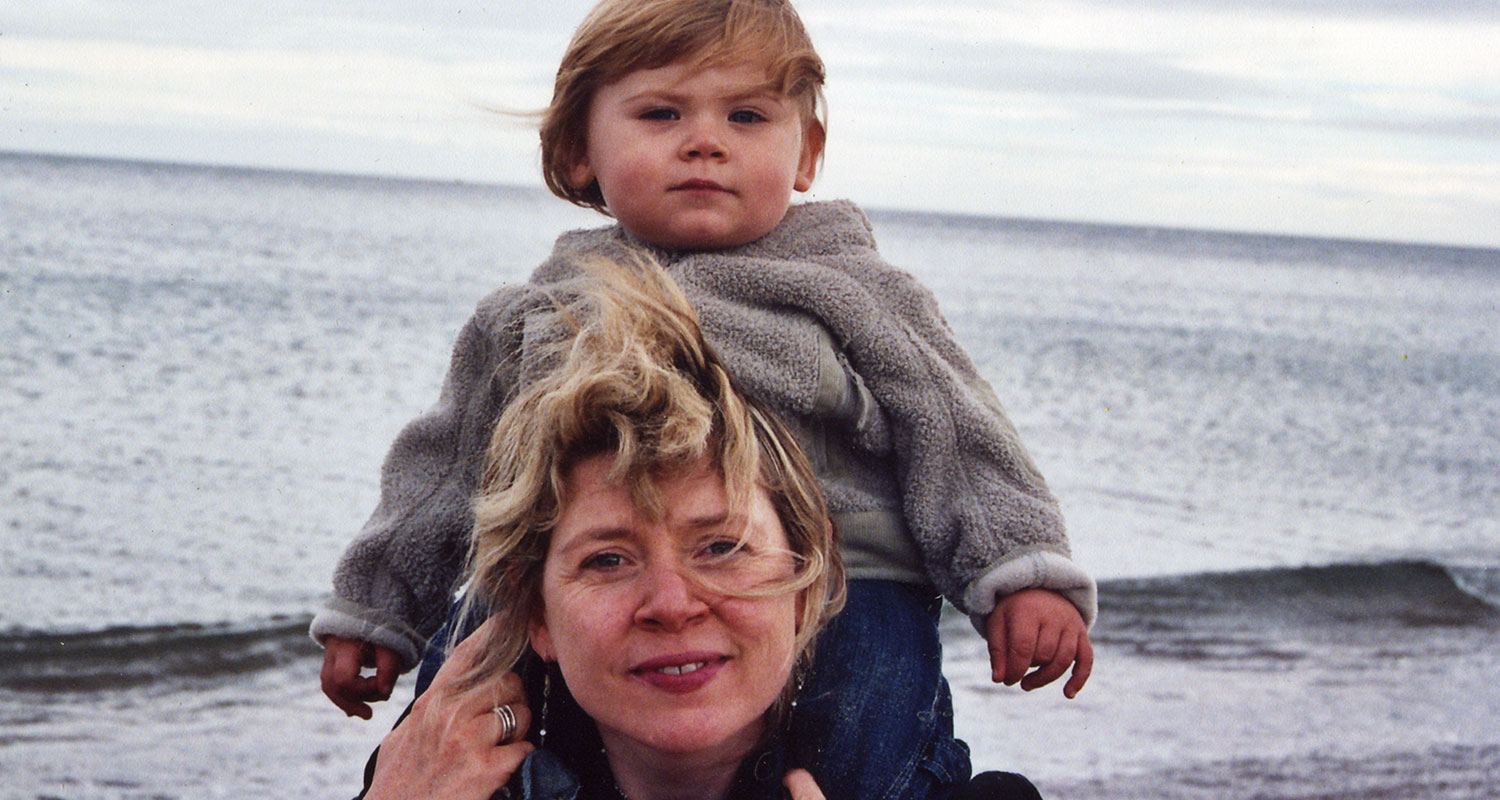
Victoria Mapplebeck: I didn’t start out thinking, I’m going to make a feature documentary about my life. It was more like survival. At 38 I found myself pregnant, broke and on my own. I’d been a self-shooting director in TV for years, but I knew that the industry wasn’t compatible with raising a baby alone. I quit almost overnight.
I started teaching film, which was more child-friendly, and I kept filming bits of my life on my old DV cam: little fragments really. Some of it was for the family archive, some of it, like the DNA test scene, obviously wasn’t. Those tapes sat in a drawer for 15 years.
When Jim, my son, was about ten, I began to write. I had a Nokia full of text messages between me and his dad, three years’ worth of love, disappointment and silence. I realised there was a whole arc in those messages. I wrote them out by hand in a notebook. That became a short story, then a memoir, then eventually a short film.
160 Characters was shot on an iPhone 6. I loved the immediacy of it, the intimacy. Around that time the film Tangerine had just come out and I thought, this is it; this is how I want to work. The phone was small, familiar, and it didn’t intimidate Jim. I’ve been shooting on smartphones ever since.
HT: And then came Missed Call and Motherboard.
VM: Yes. Missed Call came in 2017. It’s about Jim deciding, at 13, to get in touch with his father. That film won a BAFTA, which was a real lifeline. But Motherboard is the culmination of everything. It’s 20 years of our lives, hundreds of hours of footage across five generations of phones.
It’s not just a film about motherhood; it’s about memory, technology, growing up, illness. I was diagnosed with breast cancer when Jim was fourteen. That changed everything between us. The film doesn’t shy away from that.
HT: The honesty in Motherboard is extraordinary. The row between you and Jim during lockdown, for instance, is so raw. How did you navigate consent and ethics when your subject is also your child?
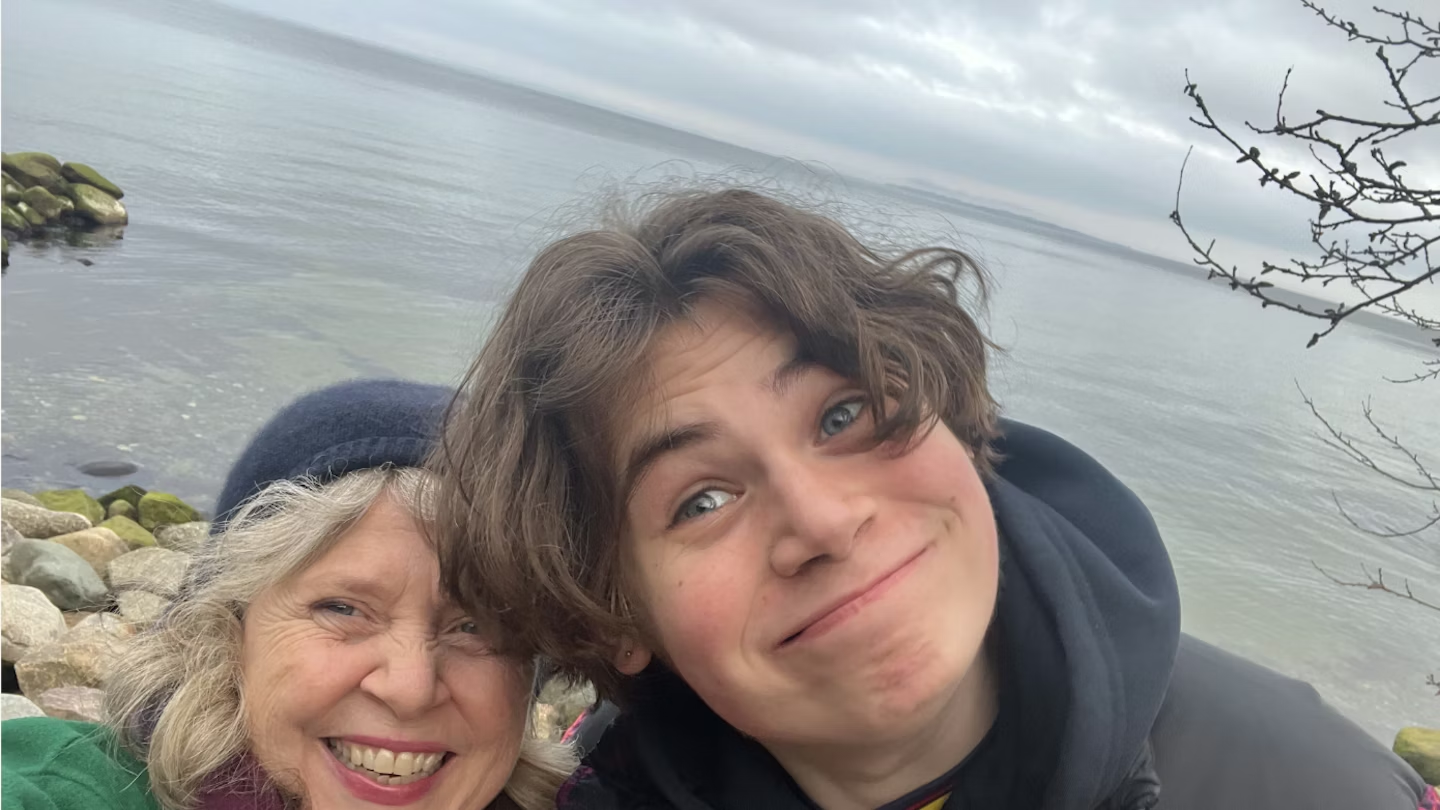
VM: That was the hardest part. Jim has always had power of veto. We edit together. That huge row in the film – he’s 16, it’s lockdown, we’re both losing it – and he watched it and said, “I know it’s good, Mum, but people will hate me.”
But then we had a test screening and Jim saw the empathy in the room. People had either been that teenager or that parent. After that, he said: “OK, keep it in.”
We also had a formal round-table funded by OKRE, with other filmmakers, commissioners and psychotherapists, to talk through duty of care. The big question was: is Jim saying yes because he really wants to, or because he knows it means everything to me? That process was tough but essential.
HT: What’s your sense of how things have (or haven’t) changed when it comes to gender bias and funding?
VM: Honestly? Things haven’t changed, certainly not enough. Some festivals now have crèches, which is brilliant, and remote working post-Covid has made life easier for parents, but structurally not much has shifted.
When I was pitching Motherboard it was always women commissioners who understood it. The men wanted “scale”: space, true crime, celebrity. I had a meeting at Netflix the day after winning the BAFTA. The executive told me my work was “too personal and too small”. I said: “Try raising a child alone, getting breast cancer and surviving a pandemic. That’s epic.” He smiled politely and showed me the door.
We were ghosted by commissioners, I was turned down by many funders until we finally received production funding from OKRE. The budget was still very tight for a feature doc, I took no fee. I ended up twenty grand in debt. Meanwhile, I keep meeting men who win a BAFTA and never have to self-finance again.
HT: You describe Motherboard as a feminist film. What does that mean for you?
VM: It’s feminist because it asks who carries the mental load. Who remembers the red jumper for non-uniform day? Who’s at the school gate? It’s about labour – emotional and physical.
When you tell people you’re a solo mother, you get this sympathetic head-tilt, as if it’s a tragedy. But it’s a choice that’s given me happiness and autonomy. The irony is that many women in couples are effectively solo parents anyway.
HT: Has Jim’s father seen the film?
VM: He’s been sent links to all of my films about me, Jim and him, but I’ve never heard back. He’s anonymous in the film – we were meticulous about avoiding jigsaw identification. Even the dating profile you see is a composite of other men’s. It was never about naming or shaming.
If he did watch it, he’d see what a brilliant young man Jim’s become.
HT: You’ve been incredibly open about your health and the emotional toll of that period. What was it like revisiting those moments in the edit?
VM: Brutal. The hardest sequence is Christmas 2018. I’d finished chemo and thought I’d feel relief, but I just fell apart. All the fear I’d been keeping at bay hit at once. I was physically wrecked, emotionally empty and terrified of leaving Jim alone in the world.
Editing it years later, my therapist asked if it was damaging to keep reliving it. I said it didn’t feel like reliving; it felt like re-scripting. Making the film helped me process it.
And I wanted to show the gallows humour too. Jim didn’t come to treatments – he was too young – but he kept me laughing through it. That humour kept us both afloat.
HT: The title Motherboard is brilliant – both techy and maternal. Where did it come from?
VM: The motherboard is the heart and brain of a device – where all the memories are stored. That felt perfect. So much of my life is archived digitally: texts, photos, videos, voicemails. The word holds both meanings – mother and memory.
HT: If you could change one thing about the documentary ecosystem to make it easier for carers and mothers, what would it be?
VM: Accept that careers have gaps. Stop equating “emerging” with “young”. I’m a debut feature director in my late fifties – and that’s normal for a lot of women.
And funders need to take emotional labour seriously. Childcare support at labs, more flexible deadlines, less fetishising of burnout. The work we do already costs us enough.
HT: What’s next for you?
VM: Jim’s moved out, so I’m filming again – this time about women in their sixties. How we navigate work, friendship, love. How we move from being mothers to being ourselves again.
Motherhood has been the joy of my life, but it’s also a loss. I want to explore what comes after.
HT: Finally, what advice would you give your younger self?
VM: Don’t compromise your soul. I once worked on a horrible daytime TV series – bullying, bad behaviour, no integrity. I signed off sick and walked away. It was the best decision I ever made. You can always find another way to pay the rent.
Motherboard is distributed by Autlook Film Sales and Tull Stories and was released in UK and Irish cinemas in summer 2025
Victoria Mapplebeck is an award winning documentary film director, a DFC Member and Professor of Digital Arts at Royal Holloway, University of London.